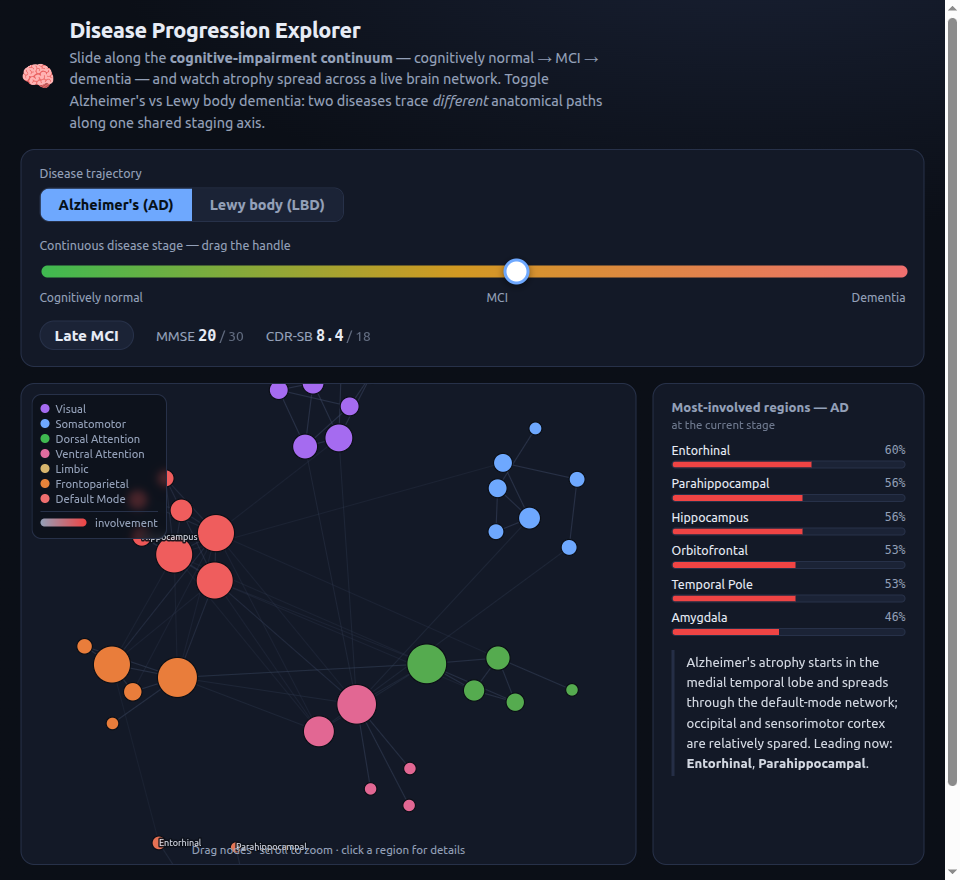
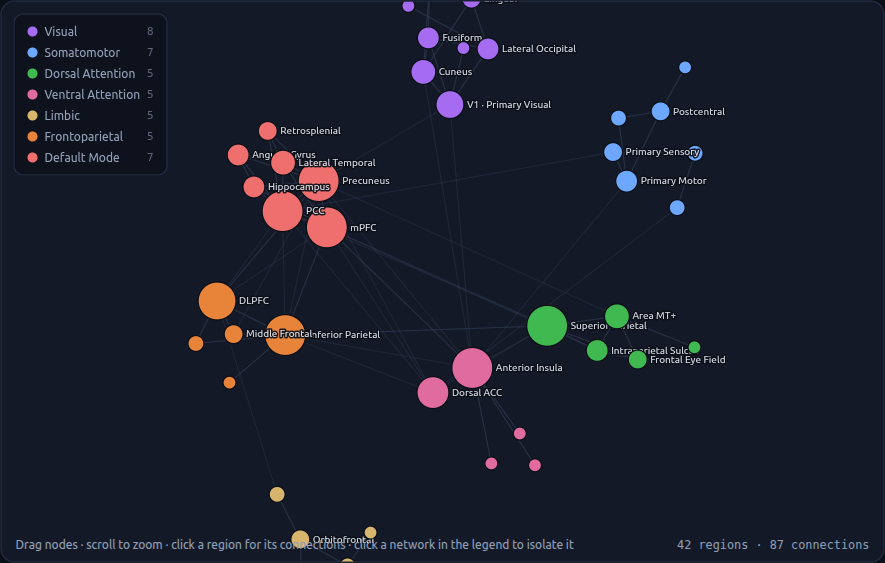
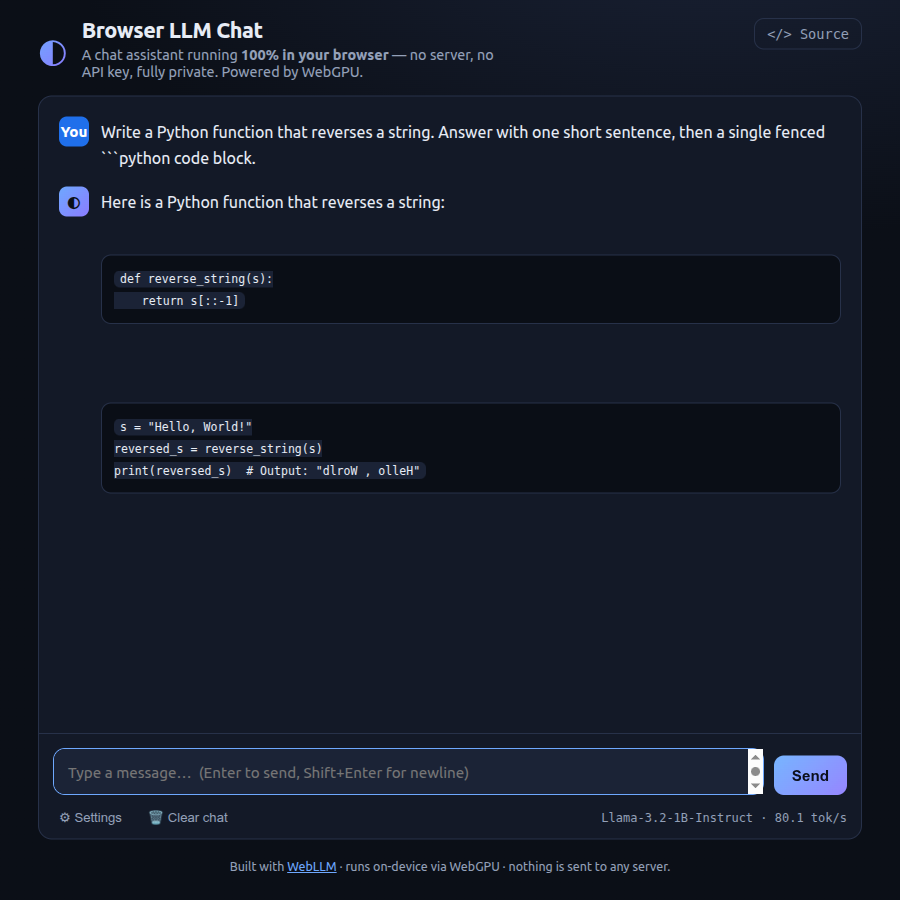
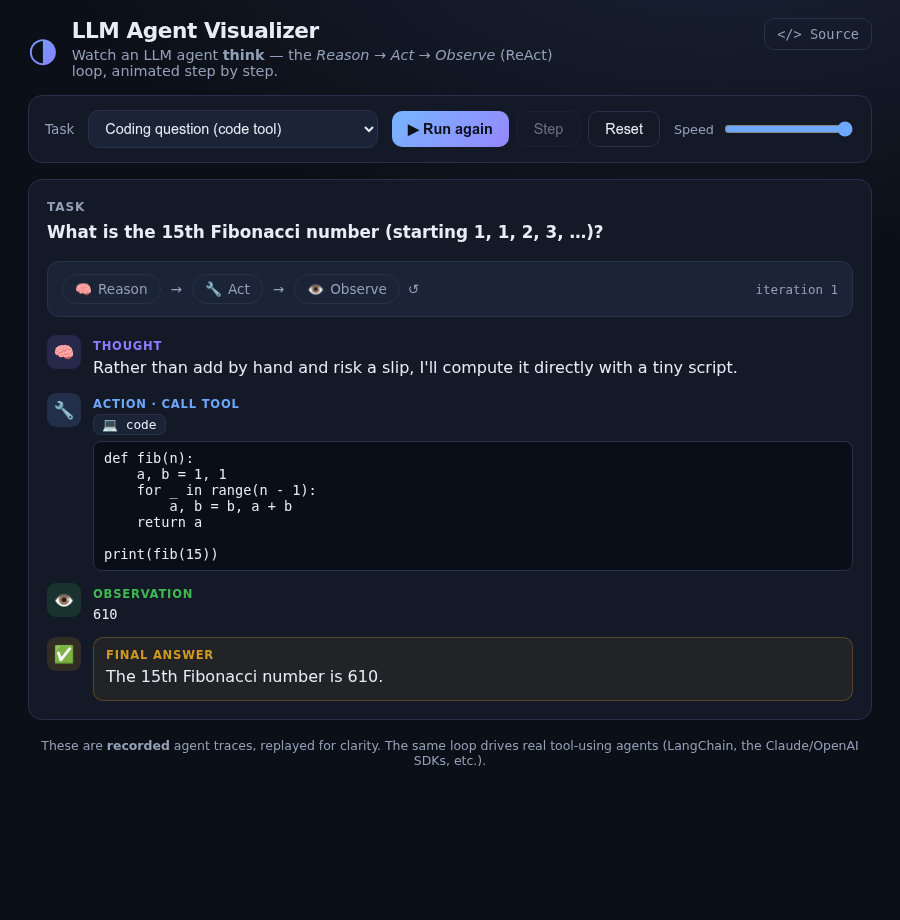
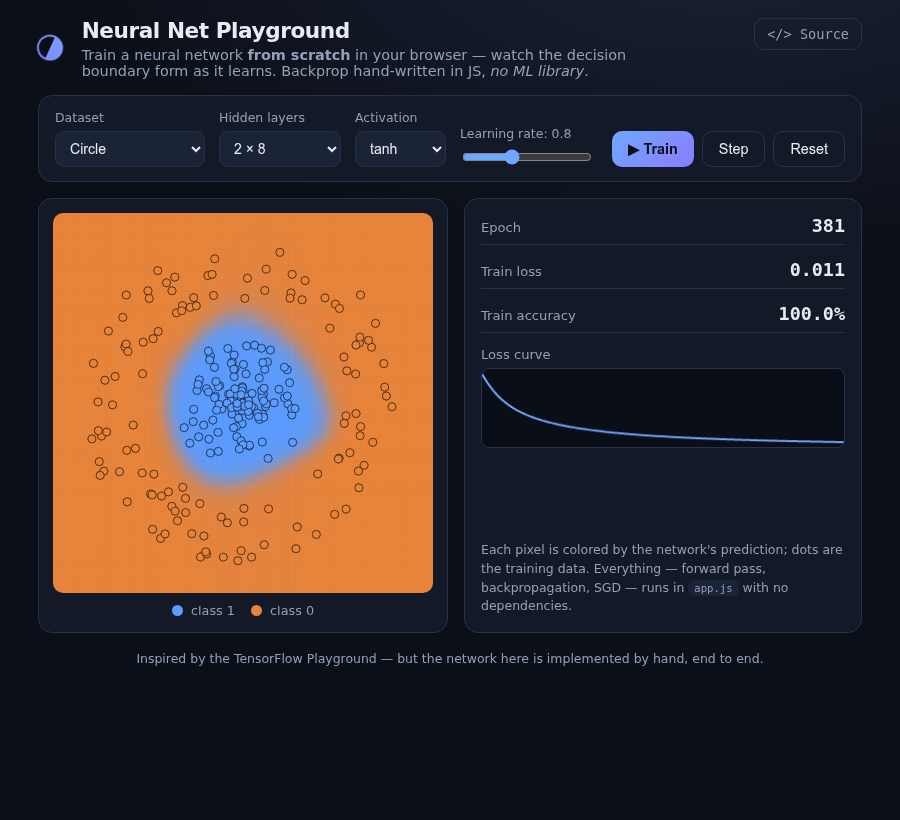
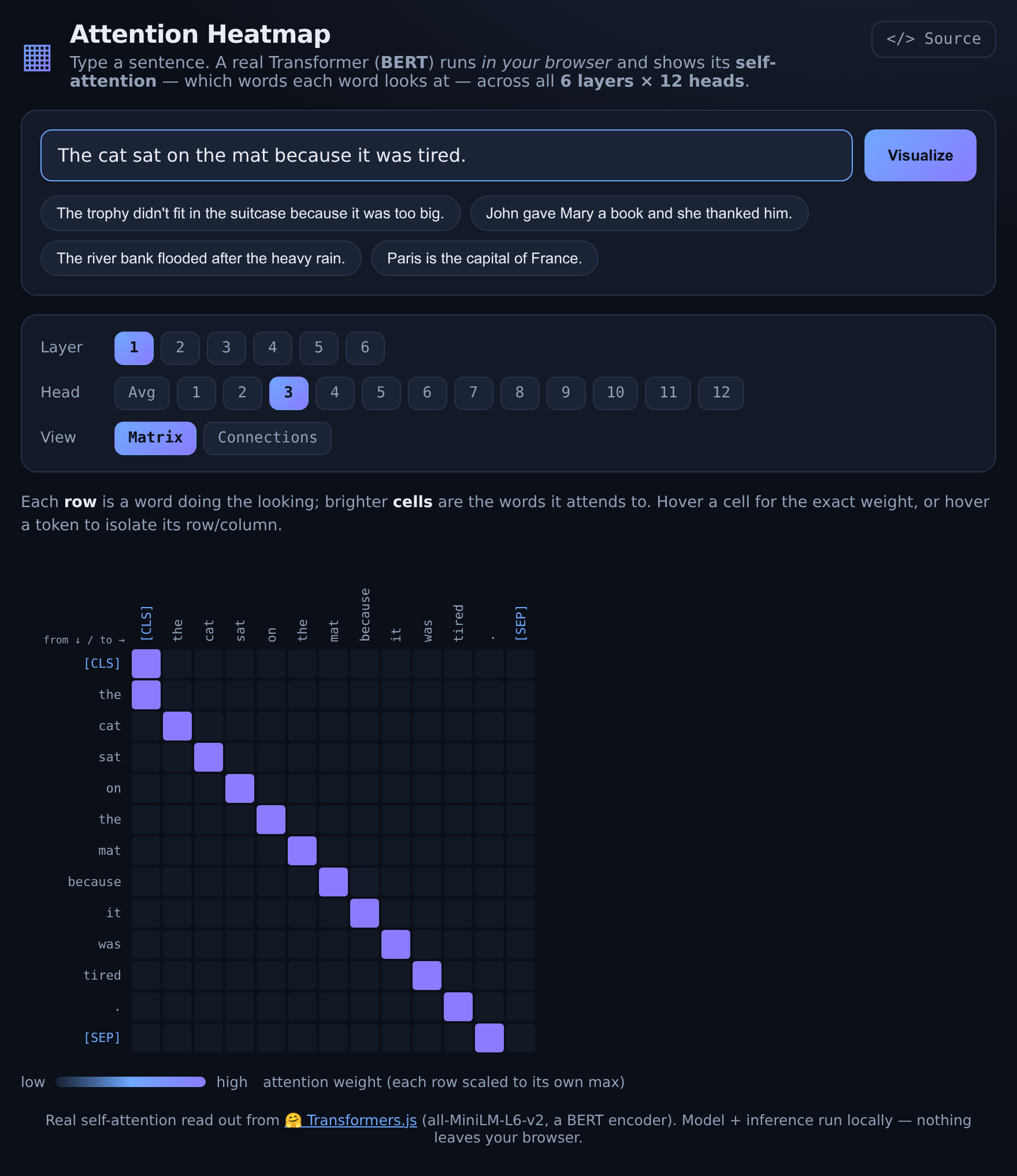
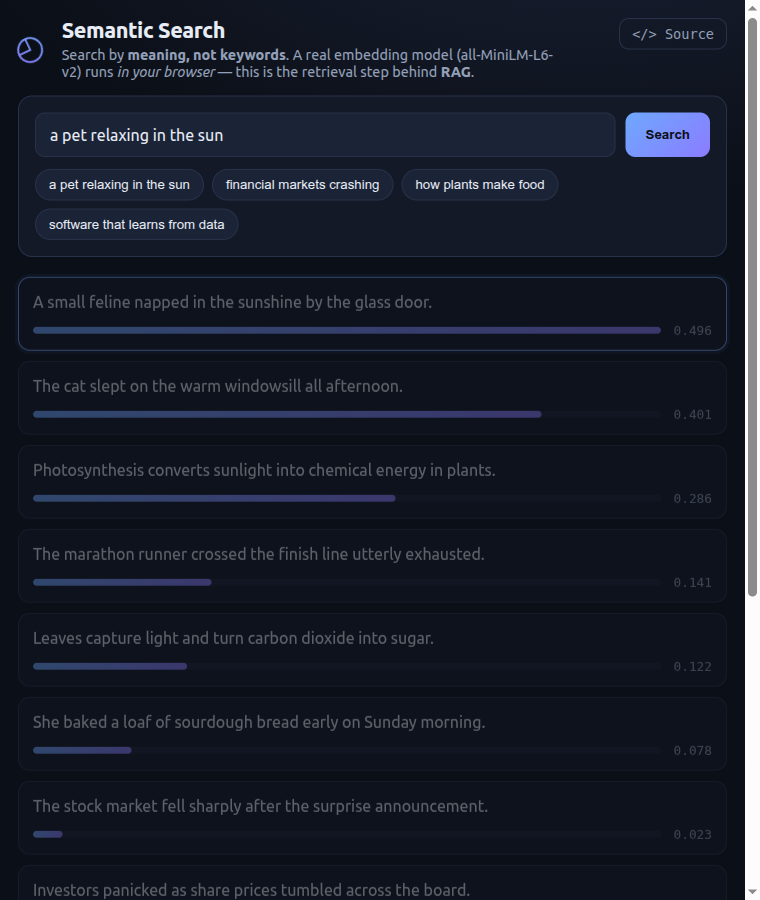
A few things I’ve built. Featured research projects are pieces of my own work on brain imaging and neurodegenerative disease, each with a paper and code. Below them, AI/ML experiments are interactive systems that run live, entirely in your browser. Click any link to open. (Demos are best in desktop Chrome or Edge.)
Featured research projects
 MICCAI 2026 · Early accept · top 9%
 Research Project · first author
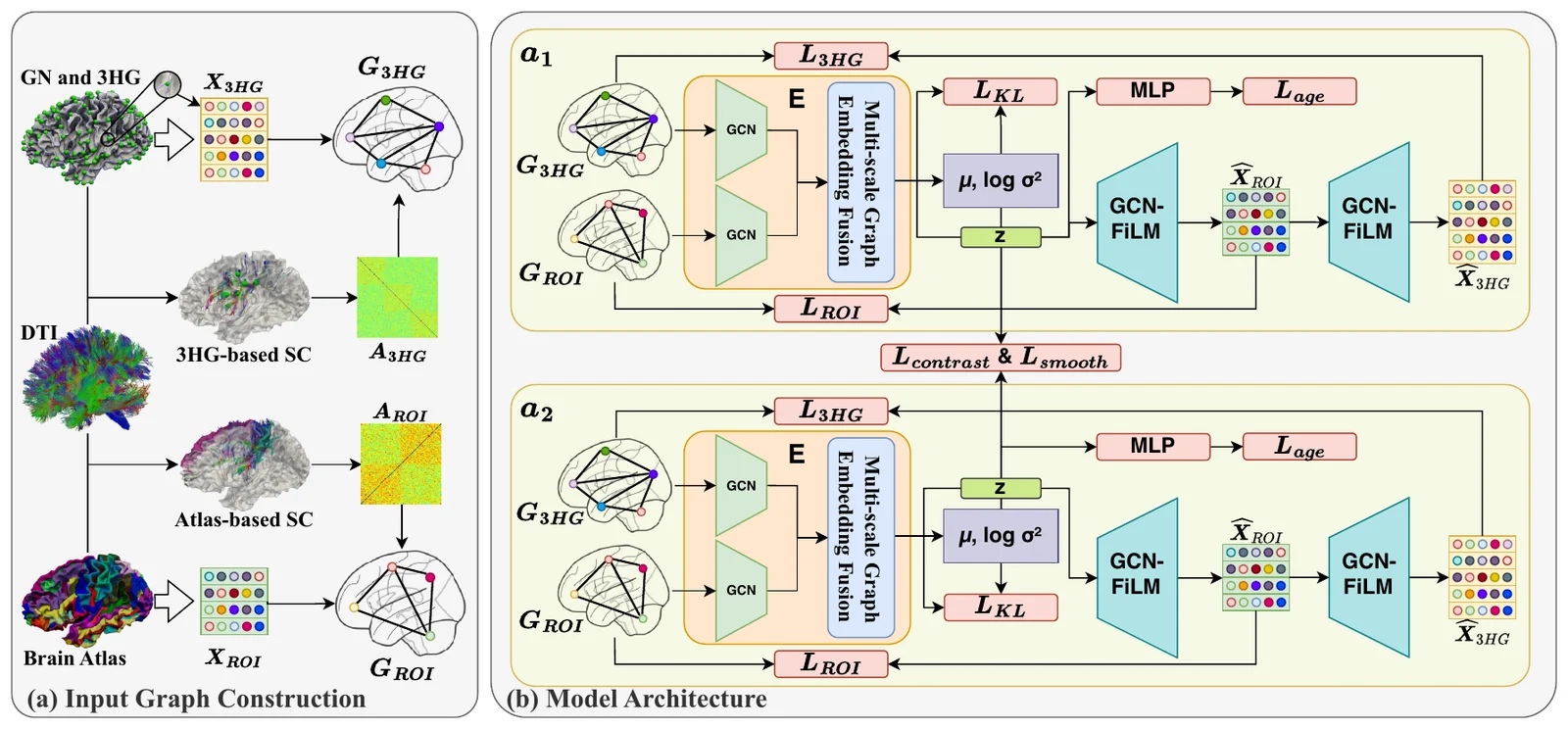
HiLoGraph — Hierarchical-Longitudinal Brain Network Representation Learning HiLoGraph encodes brain networks at two scales — fine-grained 3-hinge gyral landmarks and atlas regions, built from cortical morphology and structural connectivity — into one shared latent space, with longitudinal constraints across each subject's repeated scans. Trained only on healthy adults, this space serves as a normative reference of brain aging: a patient's deviation from it separates cognitively normal, Alzheimer's disease and Lewy body dementia without any disease-specific fine-tuning.
 MICCAI 2025 · Early accept · top 9%
 Research Project · first author
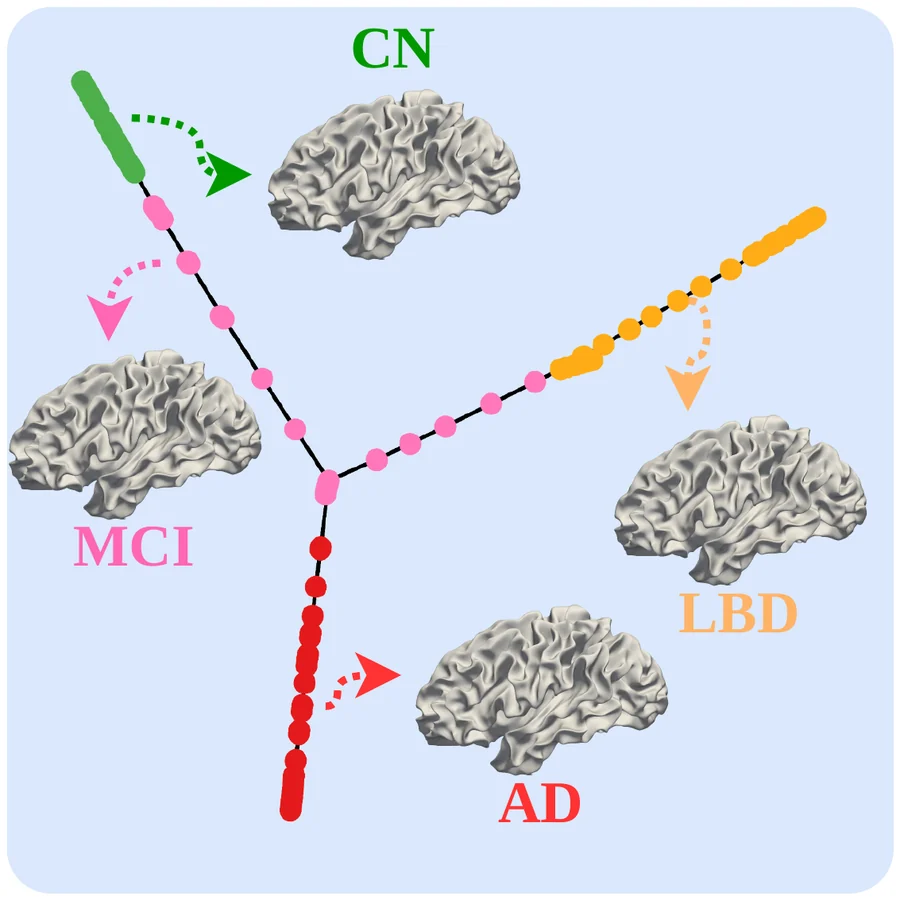
A Unified Continuous Staging Framework for Alzheimer's Disease & Lewy Body Dementia AD and LBD are usually staged with coarse, discrete clinical labels and studied in isolation — but patients lie on a continuum from mild cognitive impairment to dementia. This work places both diseases on a single continuous staging axis built from hierarchical anatomical features, so a patient's position reflects where they truly sit along that continuum.
 AAIC 2025 · Alzheimer's & Dementia
 Research Project · first author
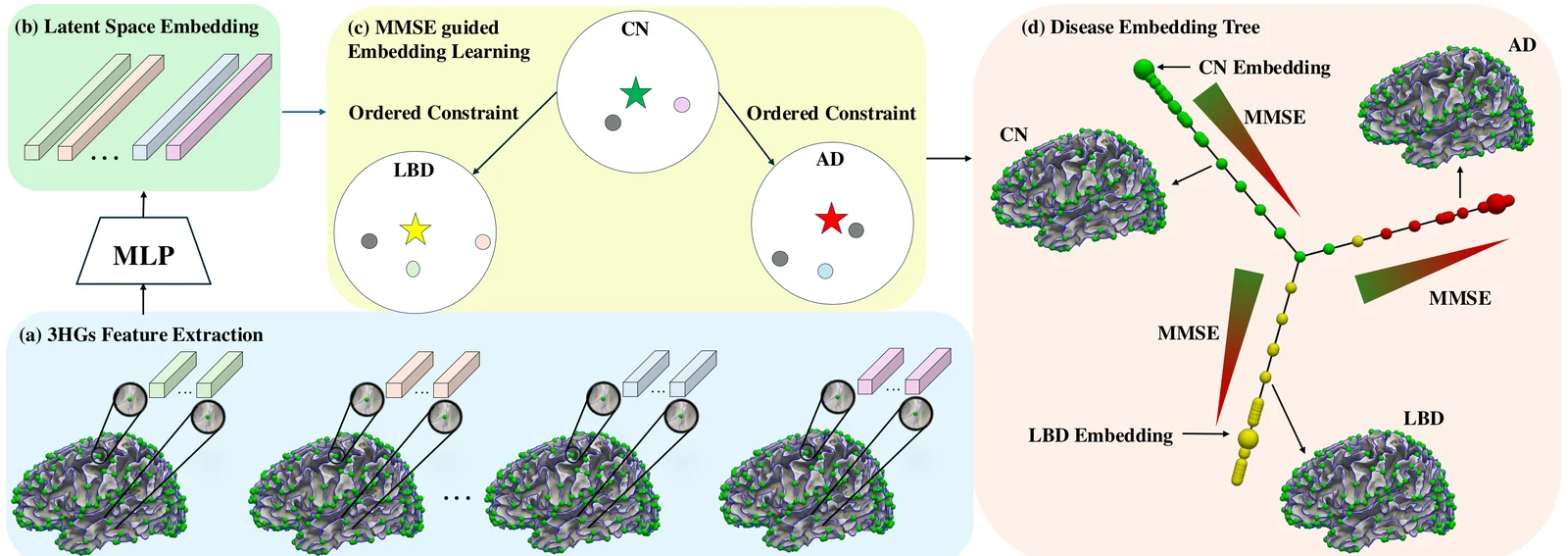
Disease Embedding Tree — a Finer-Scale Cortical Representation of the Impairment Continuum Whole-region summaries are too coarse to capture where cortical disease signatures emerge. The Disease Embedding Tree is a finer-scale cortical representation that embeds the AD/LBD cognitive-impairment continuum at a sub-regional scale.
AI/ML experiments
Interactive machine-learning systems I built to run entirely client-side.
More experiments
Smaller demos: Tokenizer Playground (the real GPT-4 BPE, live) · LLM Knowledge Graph (any topic as a force-directed graph).
Demos are built with vanilla JavaScript; the models run client-side via WebGPU / WebAssembly. The text you enter never leaves your browser — only the model weights are fetched once from a public CDN.